There’s something primal and deeply satisfying about cooking over a live fire. The sizzle of meat hitting the grates, the intoxicating aroma of smoke, and the unbeatable flavor that only charcoal can provide. If you’re new to charcoal grilling, it might seem intimidating at first. But fear not! This comprehensive guide will walk you through everything you need to know to become a charcoal grilling master. 
Quick Jump to:
Helpful products for this guide:
- ThermoMaven wireless meat thermometer — tracks long cooks without opening the smoker
- HOTEC silicone basting brushes — apply sauce, butter, or glaze evenly
- Grill Heat Aid heat-resistant BBQ gloves — protect hands around hot grates and pans
Why Choose Charcoal Grilling?
Before we dive into the how-to’s, let’s talk about why charcoal grilling is worth the effort:
- Flavor: Charcoal imparts a distinct, smoky flavor that gas grills simply can’t match.
- High Heat: Charcoal can reach higher temperatures than most gas grills, perfect for getting that steakhouse-quality sear.
- Versatility: With a charcoal grill, you can easily set up different heat zones for direct and indirect cooking.
- Cost: While the initial investment might be similar, charcoal grills are generally less expensive than gas grills in the long run.
- Portability: Most charcoal grills are more portable than their gas counterparts, making them great for camping, tailgating, or picnics.
Now that you’re convinced, let’s get into the nitty-gritty of charcoal grilling for beginners.
Essential Equipment for Charcoal Grilling
To get started with charcoal grilling, you’ll need a few key pieces of equipment:
- Charcoal Grill: A basic kettle grill is perfect for beginners. The Weber Original Kettle Premium Charcoal Grill is a classic choice that will serve you well for years.
- Charcoal Chimney Starter: This is the easiest and safest way to light your charcoal. The Weber Rapidfire Chimney Starter is a reliable option.
- Charcoal: You’ll need to choose between briquettes and lump charcoal (more on this later).
- Grilling Tools: Long-handled tongs, a spatula, and a grill brush are essential.
- Instant-Read Thermometer: For perfectly cooked meat every time, invest in a good thermometer like the ThermoPro TP19 Waterproof Digital Meat Thermometer.
- Heat-Resistant Gloves: Protect your hands when handling hot grates or moving coals.
- Aluminum Drip Pans: These are useful for indirect cooking and catching drippings.
How to Start a Charcoal Grill for Beginners
Starting a charcoal grill might seem daunting at first, but with the right technique, it’s a breeze. Here’s a step-by-step guide: 
- Open all vents: Make sure the bottom vents on your grill are fully open.
- Fill the chimney starter: Fill your chimney starter about ¾ full with charcoal.
- Light the starter: Place a couple of sheets of crumpled newspaper in the bottom of the chimney starter, then light it.
- Wait for the coals to ash over: It usually takes about 15-20 minutes for the coals to be ready. You’ll know they’re ready when the top coals are starting to ash over and glow red.
- Pour out the coals: Once ready, carefully pour the hot coals onto the charcoal grate of your grill.
- Arrange the coals: For direct heat cooking, spread the coals evenly. For two-zone cooking (more on this later), pile them on one side of the grill.
- Preheat the grill: Put the cooking grate in place, close the lid, and let the grill preheat for about 10-15 minutes.
- Clean the grates: Use a grill brush to clean the grates before cooking.
Charcoal Grilling Techniques for Beginners
Now that your grill is fired up, let’s talk about some basic grilling techniques:
Direct Heat Grilling
This is the most basic form of grilling. The food is cooked directly over the hot coals. It’s perfect for quick-cooking items like steaks, burgers, hot dogs, chicken breasts, and vegetables. 
Indirect Heat Grilling
For larger cuts of meat or foods that need longer cooking times, indirect heat is the way to go. Set up your grill with coals on one side and no coals on the other. Place the food on the side without coals and close the lid. This method turns your grill into an oven, perfect for things like whole chickens, roasts, or even baking.
Two-Zone Grilling
This combines both direct and indirect heat. It’s incredibly versatile and allows you to sear over high heat, then move food to the cooler side to finish cooking without burning. 
Tips for Successful Charcoal Grilling
- Control your temperature: Use the vents on your grill to control the temperature. More air = hotter fire. Less air = cooler fire.
- Use a meat thermometer: Don’t guess about doneness. A good instant-read thermometer is your best friend for perfectly cooked meat.
- Let meat rest: After cooking, let your meat rest for 5-10 minutes before cutting into it. This allows the juices to redistribute, resulting in juicier meat.
- Keep the lid closed: Every time you open the lid, you lose heat. Resist the urge to constantly check your food.
- Clean your grill: After each use, clean your grates and empty the ash. A clean grill is a happy grill.
Charcoal Choices: Briquettes vs. Lump Charcoal
When it comes to charcoal, you have two main options:
Charcoal Briquettes
Pros:
- Consistent size and shape
- Burns evenly and for a long time
- Generally less expensive
Cons:
- Contains additives
- Can produce more ash
For a reliable option, try Kingsford Original Charcoal Briquettes.

Lump Charcoal
Pros:
- 100% natural hardwood
- Burns hotter
- Produces less ash
Cons:
- More expensive
- Burns faster
- Inconsistent size pieces
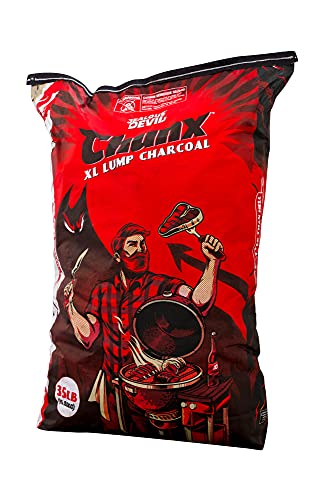
For a high-quality lump charcoal, consider Jealous Devil All Natural Hardwood Lump Charcoal.
For beginners, briquettes are often easier to work with due to their consistency. As you get more experienced, you might want to experiment with lump charcoal.
Frequently Asked Questions
How long does it take for charcoal to be ready?
It usually takes about 15-20 minutes for charcoal to be ready when using a chimney starter. The coals are ready when they’re mostly covered with gray ash.
How much charcoal should I use?
For a standard 22″ kettle grill, start with about 50-60 briquettes for high heat cooking. For lower temperatures or longer cooks, you might use fewer.
Can I add more charcoal while cooking?
Yes, you can add more lit charcoal if needed. It’s a good idea to keep a small chimney of lit coals ready for longer cooks.
How do I put out a charcoal grill?
Close all the vents on your grill to cut off the oxygen supply. The coals will eventually go out on their own. Never use water to extinguish hot coals.
Is charcoal grilling safe?
Charcoal grilling is safe when done properly. Always grill outdoors in a well-ventilated area, keep a fire extinguisher nearby, and never leave a lit grill unattended.
Conclusion
Charcoal grilling might seem intimidating at first, but with a little practice, you’ll be grilling like a pro in no time. Remember, the key to great grilling is patience and temperature control. Don’t be afraid to experiment with different techniques and recipes. Before you know it, you’ll be the envy of the neighborhood, turning out perfectly grilled steaks, juicy burgers, and fall-off-the-bone ribs. So fire up that grill, and let’s get cooking! Happy grilling!